EVAN-FISCHER 16549563 Rear Struts Driver Passenger
fits model: Camaro. make: Chevrolet. year: 2010.
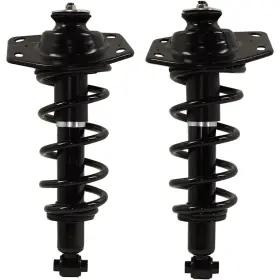
( Brand: Evan-fischer ), ( Manufacturer Part Number: 16549563 ), ( Number Of Pieces: 2 Loaded Struts ), ( Fitment Type: Direct Replacement ), ( Quantity: Set Of 2 ), ( Item Length: 1093 In Body Length ), ( Bundle Listing: Yes ), ( Part Name: Shock Absorber And Strut Assembly ), ( Placement On Vehicle: Left And Right, Rear ), ( Type: Fully Loaded Strut ), ( Extended Length: 1568 In ), ( Anticipated Ship Out Time: 1-2 Business Days ), ( Features: New, Non-adjustable, 30-day Return Policy ), ( Universal Fitment: No ), ( Collapsed Length: 113 In ), ( Cs-sku: 366 )
Review EVAN FISCHER Loaded Struts For Chevrolet Rear Driver And Passenger Side fits CAMARO 2010
The Evan Fischer 16549563 struts are specifically designed for the rear driver's side suspension of the 2010 Chevrolet Camaro. These struts are an excellent upgrade for those looking to improve their vehicle's handling and ride quality.
Each strut is engineered with a high-performance monotube design, which provides superior damping performance and consistent compression and rebound. The monotube design also allows for a larger piston diameter, resulting in increased strength and durability.
The Evan Fischer struts are manufactured using high-quality materials, including a chromed piston rod and an anodized aluminum body. The piston rod is resistant to corrosion and provides a smooth, consistent piston movement, while the anodized aluminum body is lightweight yet strong and resistant to rust and other forms of corrosion.
These struts also feature a threaded body that allows for easy adjustment of the ride height. The threaded body also makes installation and removal easier, as it eliminates the need for compressing the strut to remove it from the vehicle.
Additionally, the Evan Fischer struts come with new upper strut mounts and bushings, ensuring a proper installation and eliminating any potential vibrations or noise. The bushings are made from durable, long-lasting materials, providing a quiet and comfortable ride.
Overall, the Evan Fischer 16549563 struts for the 2010 Chevrolet Camaro rear driver's side are a top-quality upgrade for those looking to improve their vehicle's handling and ride quality. With their high-performance monotube design, durable materials, and easy installation, these struts are an excellent choice for Camaro enthusiasts.
Considerations for Buying Evan-Fischer 16549563 Struts for a 2010 Chevrolet Camaro
1. Improved Handling and Ride Comfort:- Pro: Evan-Fischer struts are designed to provide better handling and improved ride comfort compared to OEM struts.
- Con: Some drivers may not notice a significant difference in handling and ride comfort if their original struts were still in good condition.
2. Durability and Longevity:- Pro: Evan-Fischer struts are engineered to last longer than OEM struts due to their high-quality materials and construction.
- Con: These struts might be more expensive than OEM struts, making them a more significant investment for some buyers.
3. Performance Upgrade:- Pro: For Camaro enthusiasts seeking performance upgrades, Evan-Fischer struts offer enhanced handling capabilities and improved response, making them an attractive option.
- Con: The performance benefits might not be essential for everyday driving, and this upgrade could be considered unnecessary for some buyers.
4. Warranty and Customer Support:- Pro: Evan-Fischer offers a limited lifetime warranty on their struts, providing peace of mind and excellent customer support.
- Con: The warranty may not cover certain damages, and the process of filing a claim could potentially involve some hassle.
5. Installation Considerations:- Pro: Installing Evan-Fischer struts is generally a straightforward process that can be done by most DIY enthusiasts.
- Con: For those who lack mechanical skills, it might be wiser to let a professional handle the installation to ensure proper alignment and functionality.
In conclusion, the decision to buy Evan-Fischer 16549563 struts for a 2010 Chevrolet Camaro depends on individual priorities and circumstances. If improved handling, ride comfort, and durability are desired, these struts could be an excellent investment. However, if budget is a concern or performance upgrades aren't essential, OEM struts might suffice. Ultimately, the choice should be made based on personal driving needs, preferences, and the level of mechanical expertise.
Details:
specifications shockseek:
- for models: Camaro
- for makes: Chevrolet
- for years: 2010
- brand: Evan-fischer
- mpn: 16549563
- number of pieces: 2 Loaded Struts
- fitment type: Direct Replacement
- quantity: Set Of 2
- item length: 1093 In Body Length
- bundle listing: Yes
- part name: Shock Absorber And Strut Assembly
- placement on vehicle: Left And Right, Rear
- type: Fully Loaded Strut
- extended length: 1568 In
- anticipated ship out time: 1-2 Business Days
- features: New, Non-adjustable, 30-day Return Policy
- universal fitment: No
- collapsed length: 113 In
- cs-sku: 366
shipping shockseek:
- type: Fixed
- class: Economy
- transit: 4-9 Days
- cost: $0.00
- service: Economy
seller shockseek:
- rating: 97.2%
- city: Grand Prairie, Texas
- # reviews: 15711
returns shockseek:
- time: 14 Days
- policy: Returns Accepted
- paid by: Buyer
payments shockseek:
- other
- wallet: Apple-pay
- credit card: Discover
general shockseek:
- Car Truck Parts Accessories > Steering Suspension > Shocks, Struts Assemblies
- condition: New
offer shockseek:
- options: Ship-to-home
- started: May 31, 2025
- quantity: 5
- availability: In Stock
- sold: 0
Evan-fischer 16549563 Is Similar To:
- Evan-fischer 16523938 Loaded Strut For 14-18 Ford Transit Connect Front Passenger Side With Coil Spring (60.5% similar) Shipped with USPS ground advantage. Loaded strut for 14-18 ford transit connect front passenger side w/ coil spring. Condition is used...(November 10th, 2024)
- Evan-fischer 17632719 Fully Loaded Strut Front Passenger Right Side Hand For Buick Lacrosse 2012-2016 (50.8% similar) Part #: Evan-fischer 17632719 for sale...(January 27th, 2025)
- Evan-fischer 17730578 Air Suspension Compressor Front Driver And Passenger Side For Mb Mercedes Ml Class (54.1% similar) Air suspension compressor front driver passenger side for mb Mercedes ml class. 2007 -2012 GL450 base. Replacement air suspension compressor KIT-070224-C642: manufactured from top quality components, this is your best option and inexpensive replacement for rebuild, repair, maintenance...(February 5th, 2025)
- Evan-fischer 14492522 Shock Absorbers For 1999-2004 Honda Odyssey Rear Driver And Passenger Side (67% similar) Part #: Evan-fischer 14492522 for sale...(February 18th, 2025)
- Evan-fischer 16719779 Loaded Struts For 2010-2013 Ford Transit Connect Front And Rear Left Right (58.5% similar) Part #: Evan-fischer 16719779 for sale...(February 21st, 2025)
- Evan-fischer 16550792 Loaded Strut For 2009-2010 Toyota Matrix 2.4l 4pc Front Rear Left And Right (59.3% similar) Part #: Evan-fischer 16550792 for sale...(February 26th, 2025)
- Evan-fischer 16588386 Loaded Struts For 2002-2003 Ford Explorer Front Driver And Passenger Side (74.9% similar) Part #: Evan-fischer 16588386 for sale...(March 1st, 2025)
- Evan-fischer 17733999 Fully Loaded Strut Front Passenger Right Side Hand For Ford Focus 2006-2007 (50.8% similar) Part #: Evan-fischer 17733999 for sale...(March 3rd, 2025)
- Evan-fischer 17720641 Set Of 2 Shock Rear Driver And Passenger Side Left Right For E83 X3 Series Pair (54.9% similar) Part #: Evan-fischer 17720641 for sale...(March 3rd, 2025)
- Evan-fischer 16536605 Front And Rear Shock Absorber Strut Assembly Set For 1996-2007 Ford Taurus (39.4% similar) Part #: Evan-fischer 16536605 for sale...(March 5th, 2025)
- Evan-fischer 16572471 Suspension Kit For 2000-2005 Buick Lesabre 8-piece Front Left And Right (45.4% similar) Part #: Evan-fischer 16572471 for sale...(March 7th, 2025)
